Charging built where heavy freight actually runs.

Range worry isn't really about the truck - it's about being able to charge the truck when you need to. We build charging at your depot and at hubs along the corridors that matter, engineer each site around heavy vehicles, and plan every top-up before the shift starts.

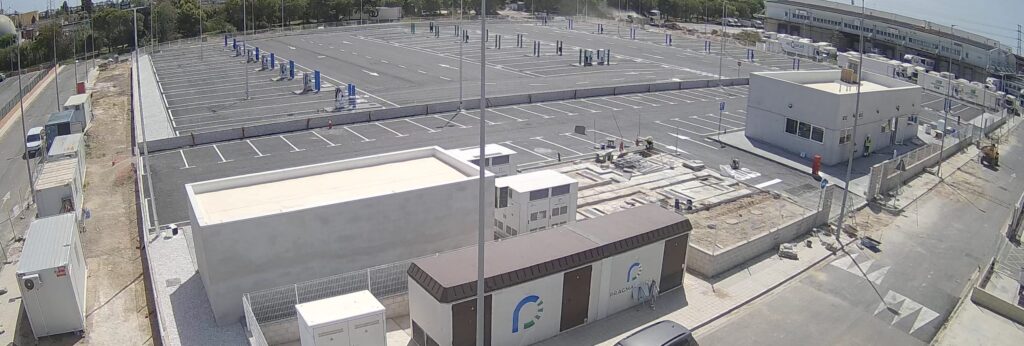
MercaValencia hub · 800 kW live
CCS2 today, MCS-ready · EU Safe and Secure Parking Standards
From drawing to tarmac

Designed and built for electric trucks and their drivers

An electric truck hub is engineered from the ground up, to support charging during driver rest breaks or when the trucks are domiciling overnight. Our charging hubs are built to keep your trucks ready for their next job - ensuring they spend as long on the road as possible, and earning for you.
01 · Design
02 · Engineering
03 · Build and Manage
01 · Design

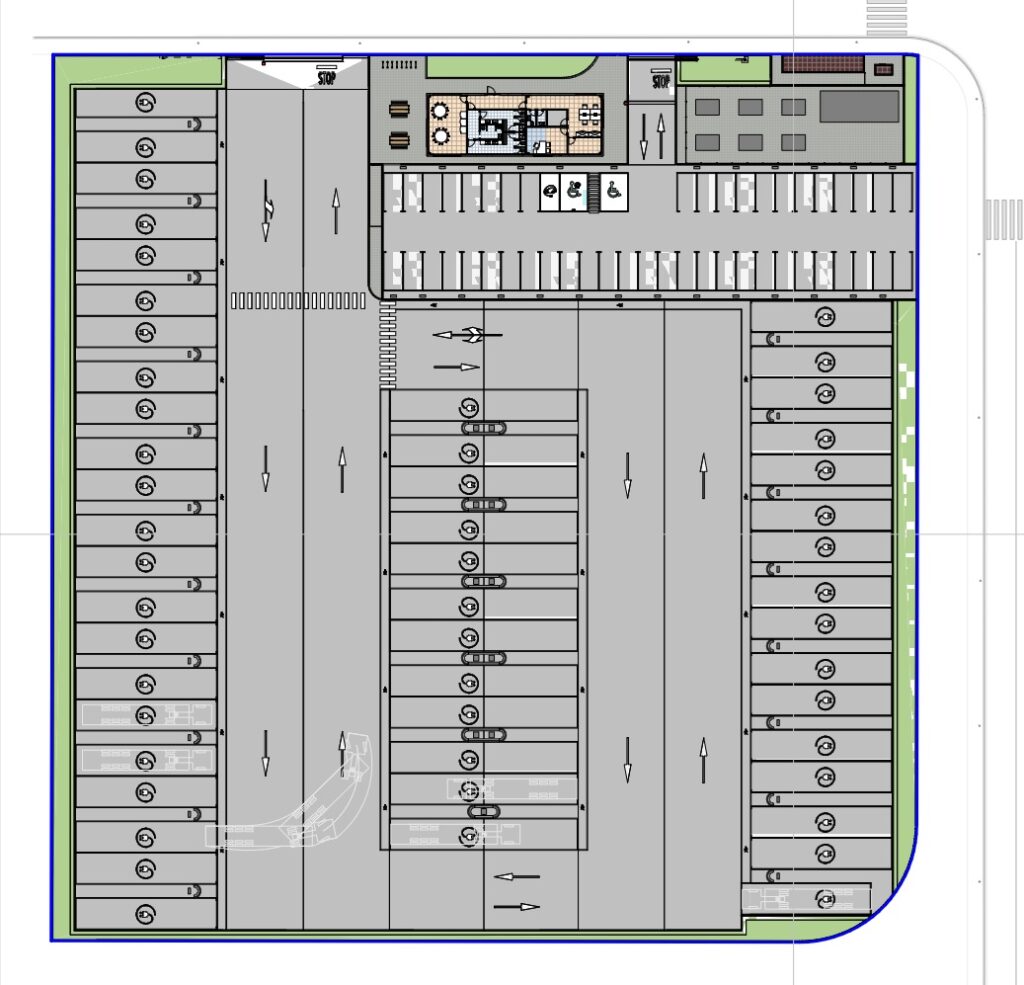
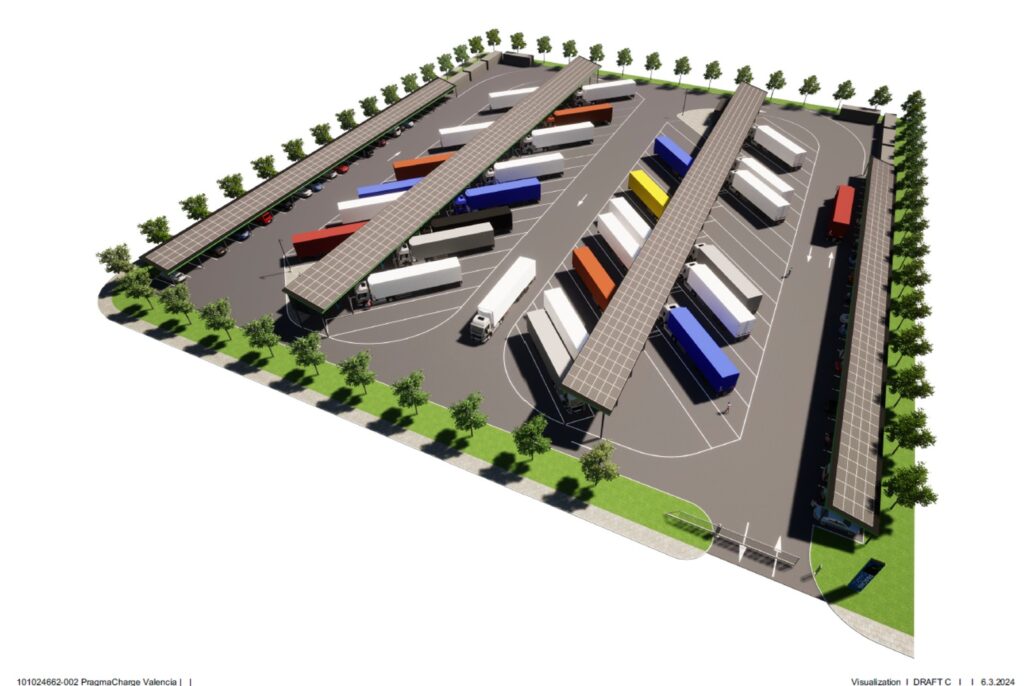
Site layout, grid connection and bay geometry, worked out from the routes the hub has to serve.
Two kinds of charging

Semi-public hubs and depot charging

Semi-public hubs do the heavy lifting. By aggregating demand from several operators at key points on the network, each site justifies far more power than any one fleet could - opening up longer routes, and giving trucks somewhere to domicile overnight away from base. Where you have land of your own, depot charging complements it.

Semi-public · shared on the network

Semi-public hubs

Shared hubs at the points the freight already passes through. Aggregated demand means each site can carry far more power than a single fleet could justify - and gives your trucks a secure place to domicile overnight when they're away from base.

  • Sited where demand concentrates, so the power is where the freight already runs
  • Aggregated demand across operators funds high-power charging no single fleet could justify alone
  • Overnight domiciling away from base - secure parking, driver facilities and a full charge by morning
  • Legs beyond a single depot charge become routine - the network, not the battery, sets the range
  • Top-ups timed to land inside the driver's mandated break, booked through dispatch
  • Every hub added strengthens the corridor for everyone running it
Private · your land

Depot charging

If you have land, we turn it into charging infrastructure. Your own trucks charge where they already park - and the same site can be opened up to other operators, so the yard earns rather than just costs.

  • We fund, build and operate the charging on land you already hold - no capital project for you to run
  • Your trucks charge overnight on off-peak energy, ready for the morning with nothing to book
  • Open the site to external operators and the yard becomes a revenue line, not just a cost centre
  • Smart load management shares the connection across the site, so you don't over-size the grid
  • Spare land, underused yard or a good location on the network - all worth a conversation
How a site is built up

Built for heavy freight, from the ground up

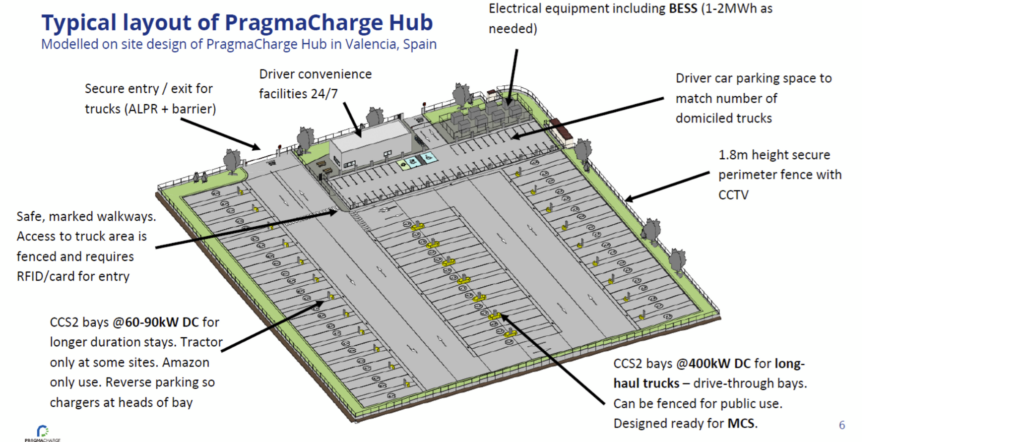
Every hub starts as a plan on paper. Drive-through bays take a full-length artic without shunting or unhitching. High-power bays turn a driver's break into a usable charge, while lower-power bays cover the longer overnight stays, and driver facilities sit within walking distance of the truck. On-site battery storage and renewable generation are designed in from the start, and the layout leaves room to add bays and power as the fleet on the corridor grows.

Typical PragmaCharge hub layout, modelled on the site design of our hub in Valencia, Spain.

Typical PragmaCharge hub layout, modelled on the site design of our hub in Valencia, Spain.

How a hub works

A hub is a rest stop, not just a plug

That layout exists for a reason. The best charging time is the rest a driver has to take anyway - so we design hubs as places to stop for the daily or weekly rest. The truck charges while the driver actually rests, and both are ready at the start of the shift.

Secure overnight parking

Lit, fenced and monitored - a safe place to leave truck and load for the night.

Driver facilities

Rest, food and washrooms - a proper stop, not a lay-by at the edge of a motorway.

Charge on rest time

Overnight and break-time charging use hours the schedule already gives up - no time lost to the plug.

Ready at the start of the shift

Full battery, rested driver: the truck rolls out with the whole leg ahead of it.

Standards

And built to open standards, compatible with industry

The same goes for what's in the ground. Charging only works if the truck, the charger and the software all speak the same language - whoever built them. Every site we build uses the standards the whole industry is converging on.

CCS2

The Combined Charging System is the DC standard every electric truck uses today, at up to 350–400 kW depending on the vehicle. Every PragmaCharge site supports it out of the box.

MCS

The Megawatt Charging System is the new heavy-truck standard, coordinated by CharIN and with its megawatt connector formalised in 2026. It puts a 20–80% charge inside ~30 minutes - a driver's break. Our corridor hubs are MCS-ready.

OCPP

The Open Charge Point Protocol connects chargers to our management system over an open interface - so hardware and software stay interchangeable, and you're never locked to one vendor.

EU Safe and Secure Parking Standards

The EU framework for safe and secure truck parking sets the bar for lighting, fencing, surveillance and driver welfare. Our hubs are designed to it, so the truck and its load are as looked after as the driver.

Get started

Let's talk about charging your fleet

Whether it's charging at your own depot, access to hubs on the corridors you run, or both - tell us how your operation works and we'll come back with what it would take: the power you'd need, where it would go, and how it fits your shift pattern.